
What Is Backtesting? A Step-by-Step Guide for Trading Strategies
Maryam
Published on Dec 07, 2023
Backtesting is a key tool in the world of trading and investing. It helps you answer a crucial question:
“If I had used this strategy in the past, would it have worked?”
By simulating a trading strategy on historical data, you can see how it might have performed—before risking any real money.
Let’s break it down 👇
📘 Step-by-Step Backtesting Process
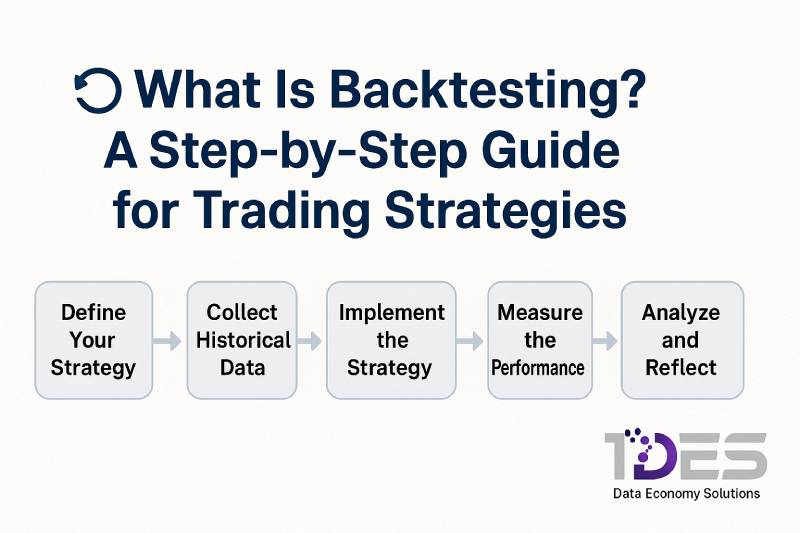
1. Define Your Strategy
Start with a clear set of rules.
- When do you buy?
- When do you sell?
- How much do you risk per trade?
- What indicators or patterns do you follow?
Being specific here is essential. Vague strategies lead to meaningless results.
2. Collect Historical Data
You’ll need reliable historical data that matches the market and timeframe you’re targeting.
Examples include:
- Stock or crypto price data
- Market indices
- Technical indicators
- Economic or sentiment data (if applicable)
3. Implement the Strategy
Now it’s time to code or configure your strategy.
This step involves applying your rules to the historical data to simulate trades. Depending on the tools you use (Python, trading platforms, backtesting libraries), this step can range from no-code to fully programmatic.
4. Measure the Performance 📊
Once your trades are simulated, it’s time to analyze the results. Look at key metrics such as:
- Total return
- Annualized return
- Maximum drawdown
- Sharpe ratio
- Sortino ratio
- Win rate / trade frequency
- Volatility
These help you understand both the potential profit and the risks involved.
5. Analyze and Reflect
What did the results tell you?
- Was the strategy profitable overall?
- Did it only work during specific market conditions?
- Was the drawdown acceptable?
- Would you trust this system with your own money?
Use these insights to tweak and improve your strategy.
⚠️ Don’t Forget the Caveats
- Past performance ≠ future results
Markets evolve. What worked yesterday may fail tomorrow. - Slippage and fees are often ignored in backtests. Real-world execution can eat into your profits.
- Overfitting danger
If you fine-tune your strategy too much on past data, it might just be learning noise instead of actual patterns.
That’s why backtesting should be one part of your process—not the only part. Combine it with paper trading, real-time monitoring, and a solid risk management plan.
✅ Final Thought
Backtesting is like a time machine for traders 🕰️—letting you test ideas before putting your money on the line. Just remember: use it wisely, question your results, and stay curious.